A Swedish packaging and labelling company already had a machine for applying wrap-around labels to spools of sewing thread.

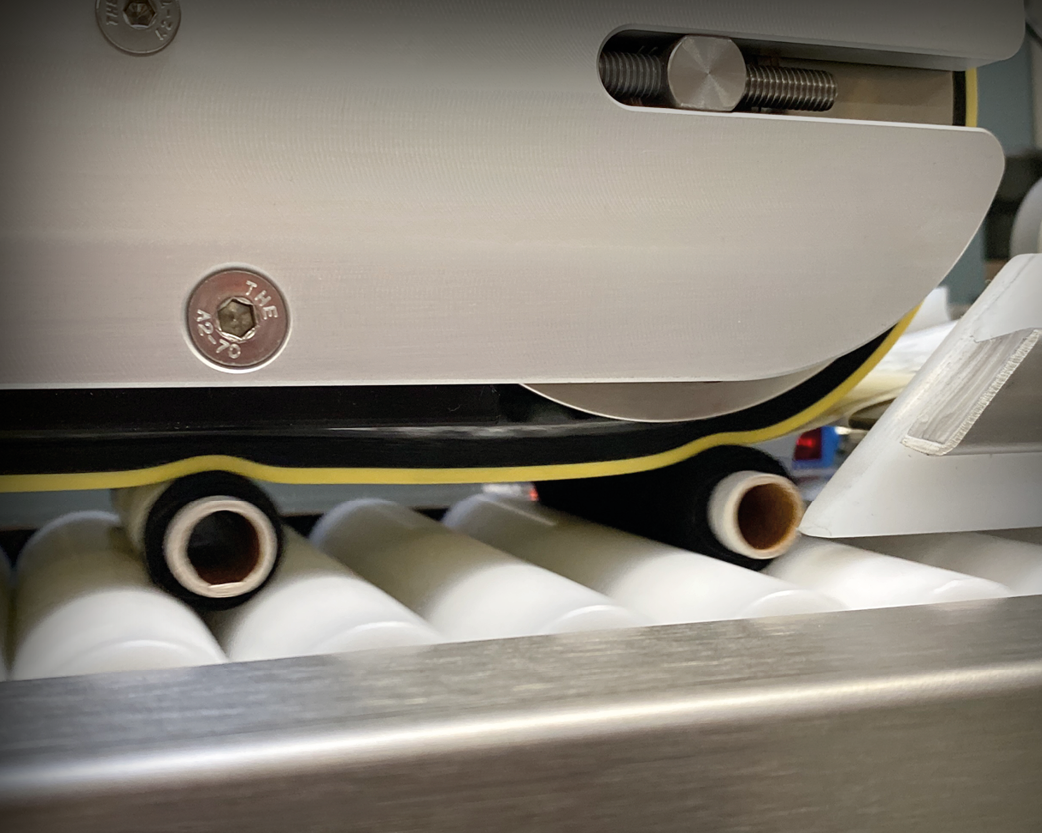
For the larger thread spools, the solution worked as intended. But when smaller diameters were introduced, the existing machine could no longer handle them reliably.
The challenge was not the label itself or the way it needed to be applied. The smaller spools simply required a different level of control while moving through the machine.
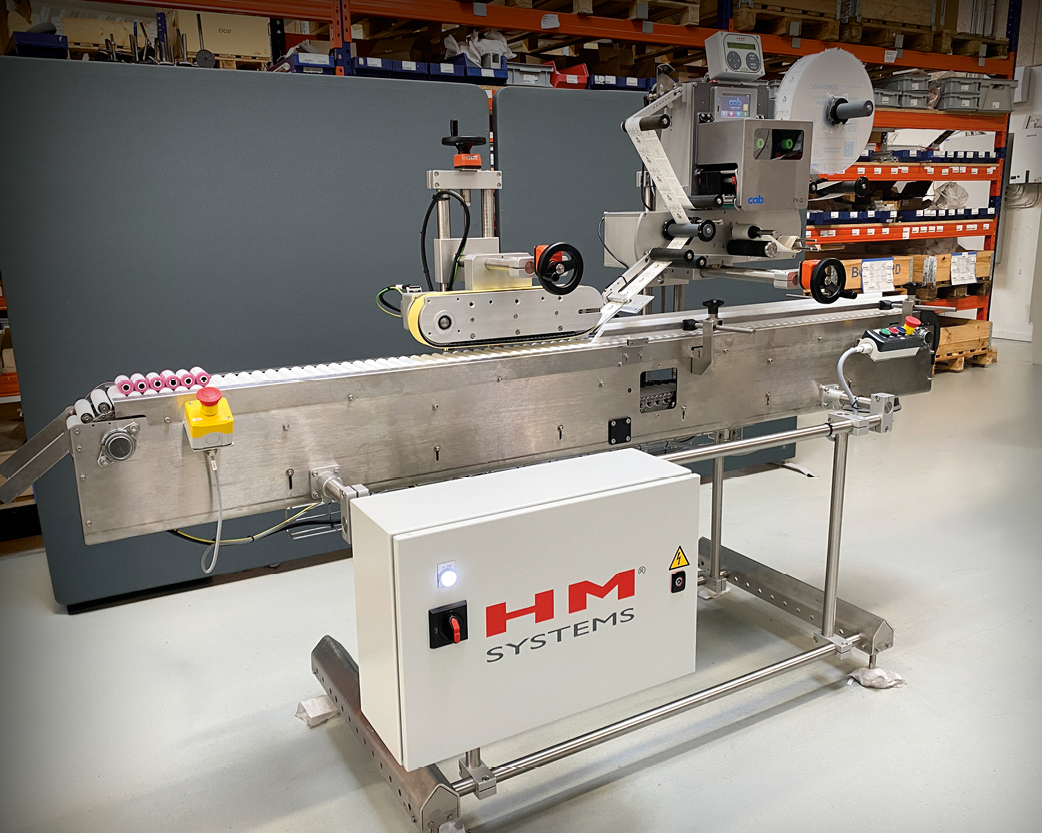
Together with a label and print partner, HM Systems therefore developed a new solution designed specifically for the smaller thread spools.
The label and print partner developed the label construction, supplies the label material and provides the printer, while HM Systems developed and built the machine that handles the spools during labelling.
Applying a label around a spool of sewing thread may sound straightforward.
But as the diameter gets smaller, the way the product is handled becomes increasingly important.
The spool needs to stay in the correct position while it moves through the machine and rotates during labelling. If it shifts or turns unevenly, the label will not sit correctly around the thread.
The existing machine had been designed for larger spools and could not simply be adjusted further down.
That meant the mechanical setup had to be adapted to the smaller format.
The new solution uses a specially designed conveyor setup that keeps the thread spool controlled as it moves through the machine. At the same time, the spool is rotated so the label can be applied evenly around it.
The result is a stable and consistent application, even on the smaller diameters.
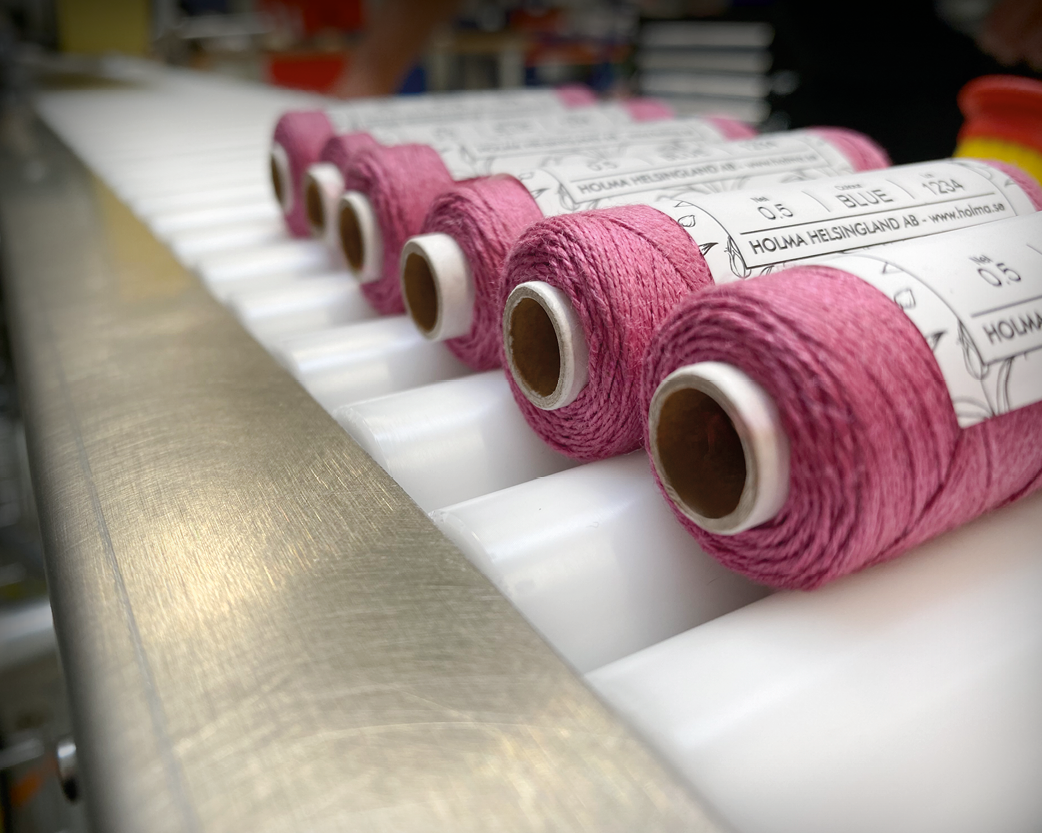
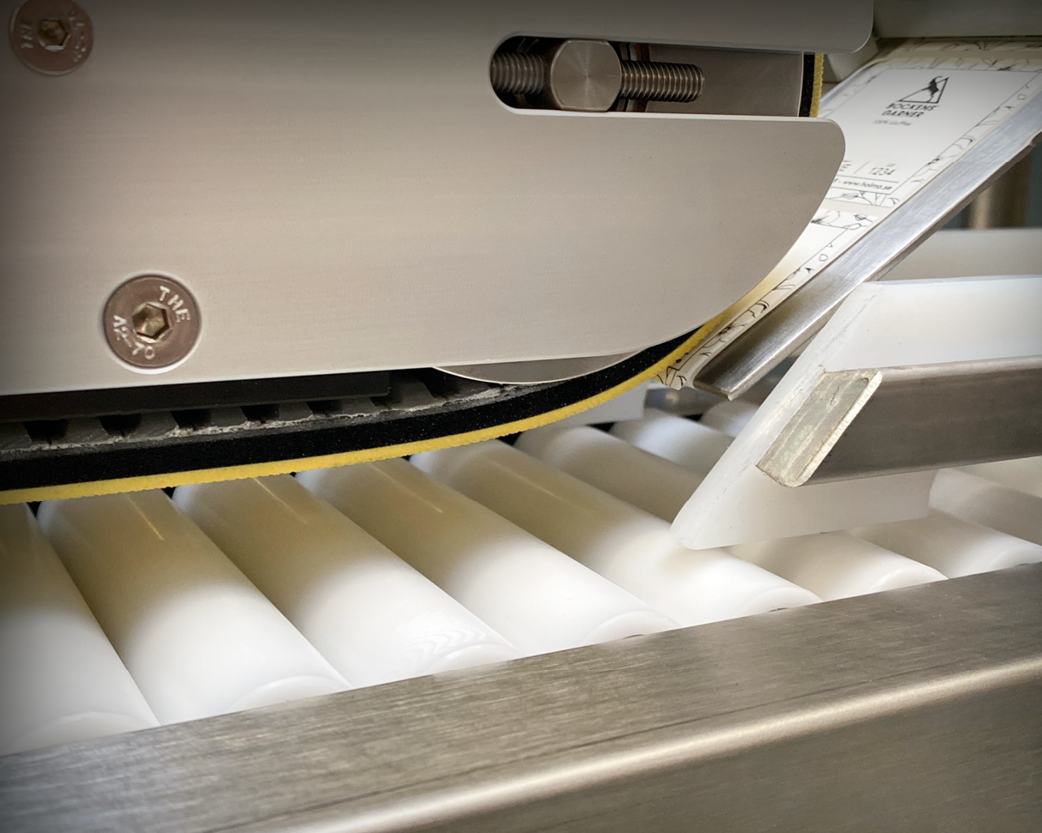
The machine itself was only one part of the project.
For wrap-around labelling to work properly on a small spool, the label construction, material, printer and mechanical handling all need to work together.
The partner developed the label and selected the material for the application. They also provide the printer, while HM Systems focused on the machine and the mechanical handling of the thread spools.
Developing the different parts together made it possible to build the solution around the actual product rather than trying to make an existing setup fit.
The new machine gives the Swedish packaging and labelling company a solution for the smaller thread spools that could not be handled by the existing equipment.
The labelling method remains the same.
What has changed is the way the product is guided, rotated and controlled throughout the process.
A relatively small change in diameter was enough to require a different mechanical approach.
Now the smaller thread spools can be labelled with the same type of wrap-around application as the larger ones.
 Products


 Dansk
Dansk